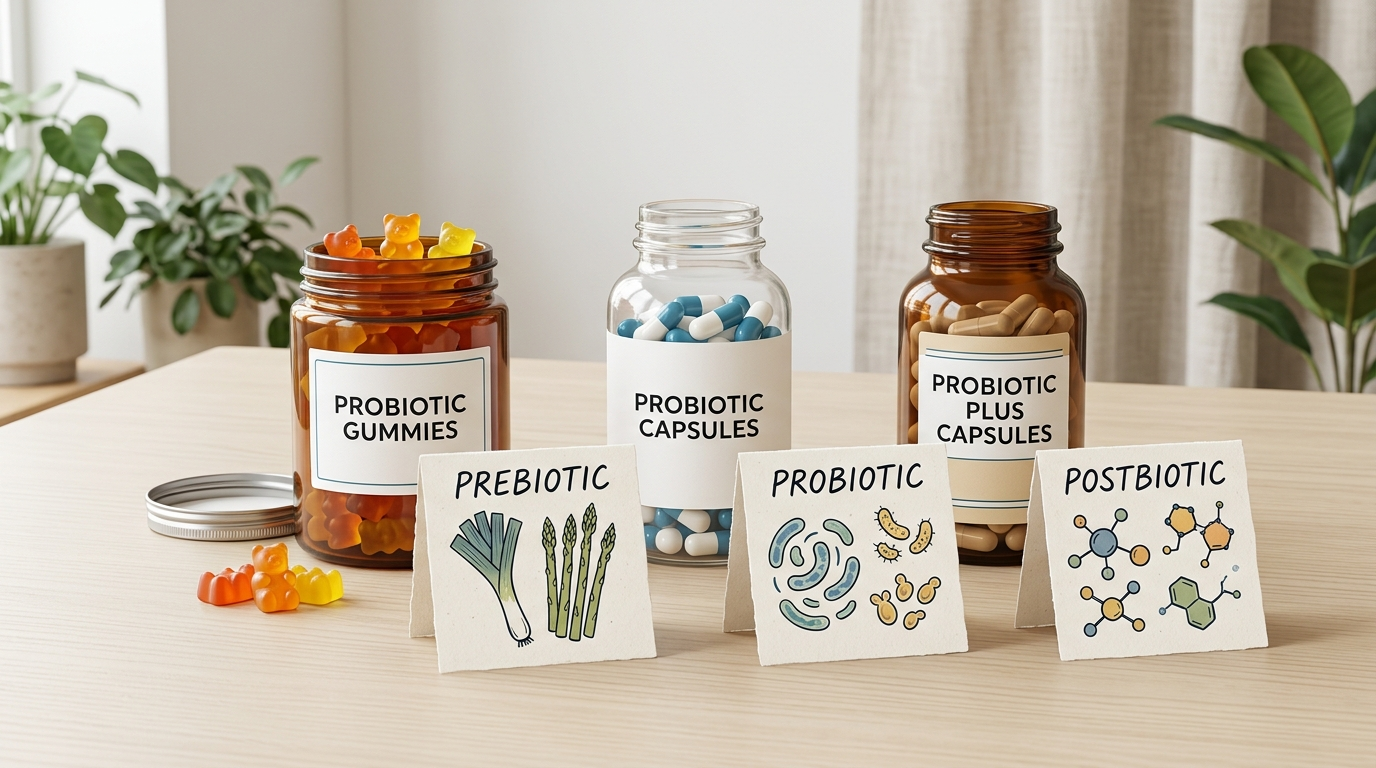
The best Bioma alternative for bloating depends on what you want Bioma to do. If you want a synbiotic-style formula with multiple mechanisms, Bioma is one reference point. If you want simpler daily adherence, clearer format fit, or a more familiar strain story, alternatives such as Yuve Probiotic Gummies, Align, or Culturelle can be easier to judge.
How did we evaluate Bioma alternatives for bloating?
We compared products by mechanism, strain transparency, format, and day-to-day adherence instead of chasing the loudest marketing claims. We used the NIH Office of Dietary Supplements probiotic fact sheet, ISAPP resources on probiotics, Harvard Health, and Bioma’s own product page at bioma.health as reference points. We prioritized whether a product names specific organisms, explains storage and format clearly, and fits a realistic daily routine. We excluded exaggerated weight-loss promises and broad gut-reset language because those claims often tell you less than the actual ingredient panel and usage design.
What should you compare first when looking for a Bioma alternative?
The first comparison should be mechanism, not brand popularity. Bioma presents itself as a combined prebiotic, probiotic, and postbiotic product, with xylooligosaccharides, tributyrin, and a proprietary probiotic blend listed on its site at bioma.health. That structure may appeal to shoppers who want a layered formula, but it also creates a harder attribution problem because several moving parts change at once. The NIH Office of Dietary Supplements notes that probiotic products are most interpretable when genus, species, and strain identity are clear. Harvard Health makes the same practical point in plain language: probiotics are not interchangeable. For bloating, the smarter comparison is single-strain simplicity versus broader synbiotic design, plus whether the format is a capsule, gummy, or powder you will actually take long enough to judge.
How do the main alternatives compare on fit and transparency?

Some links below are affiliate links. This does not influence our evaluation criteria or recommendations.
| Option | Main structure | Best fit | Main watch-out |
|---|---|---|---|
| Bioma | Prebiotic + postbiotic + proprietary probiotic blend | Shoppers who want a multi-mechanism formula in one product | Harder to isolate which component drives the experience |
| Yuve Probiotic Gummies | Simple gummy probiotic format | People who care most about adherence and dislike capsules | Format convenience matters, but label specifics still need review |
| Culturelle Digestive Daily | Lactobacillus rhamnosus GG focused capsule | People who want a widely recognized strain-specific option | Single-strain products are still use-case dependent |
| Align | Bifidobacterium 35624 focused capsule | People who prefer a simple branded probiotic comparison | Capsule-only format may reduce adherence for some users |
A better alternative is not the one with the most buzzwords. It is the one whose mechanism and format you can understand well enough to test cleanly.
Which option makes the most sense for different kinds of shoppers?
Best for low-friction daily use: Yuve Probiotic Gummies, because format friction is a real reason people stop taking probiotic products before they can judge them fairly. Best for a multi-mechanism experiment: Bioma, because its prebiotic plus postbiotic framing gives shoppers a broader formula if they specifically want that style. Best for strain-first shoppers: Culturelle Digestive Daily, because Lactobacillus rhamnosus GG is one of the most recognizable named strains in the literature cited by the NIH Office of Dietary Supplements. Best for simple single-product comparison shopping: Align, because its product identity is easy to understand even if it is not automatically the best fit for every bloating pattern. ISAPP emphasizes that benefit depends on the specific microorganism and context, not the category label alone. That is why routine fit, strain clarity, and mechanism still matter more than marketing language.
What questions come up most often about Bioma alternatives?
Is a Bioma alternative automatically better if it has more strains?
No. More strains can sound impressive, but strain count alone does not tell you whether the product matches your use case or is easier to judge.
Does bloating always mean you need a probiotic?
No. Meal size, food triggers, fiber pattern, carbonation, and eating speed can all matter. A probiotic product is only one piece of the comparison.
Are gummies less legitimate than capsules?
Not automatically. Gummies can improve adherence, and adherence is part of real-world effectiveness.
What matters more, CFU or strain identity?
Strain identity usually tells you more. A giant CFU number without a clear strain story is not automatically more useful.
Should you switch products quickly if one week feels unimpressive?
Usually no. Clean comparisons need consistency, otherwise you are mostly measuring impatience.
What is the best first filter when shopping?
Start with the format you will actually take, then review strain details, storage instructions, and the rest of the ingredient structure.
The strongest Bioma alternative is the one you can understand, tolerate, and use consistently. For most shoppers, that means filtering by mechanism and format first, then choosing the product with the clearest fit instead of the flashiest promise.
Leave a Reply